
CASE STUDY

Restoring a carved Victorian front door

The short answer

I restored the original carved front door at Holly House in Newcastle-under-lyme, a Victorian terrace used as offices by Rory Mack Associates. Decades of paint had clogged the carvings and was flaking away, so I stripped every detail back by hand. I then repainted the door in gloss yellow and refreshed the frame, railings and plinth around it.

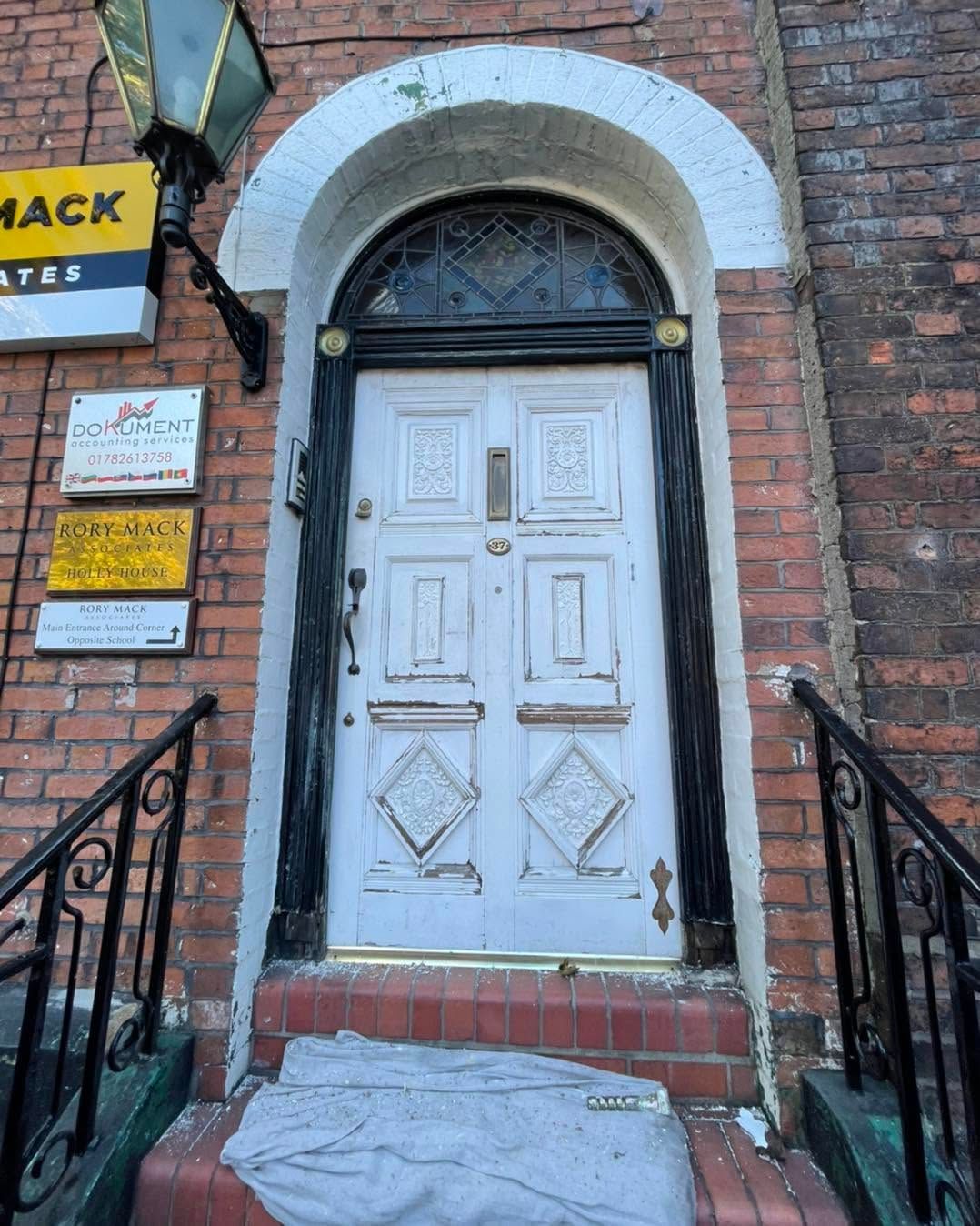
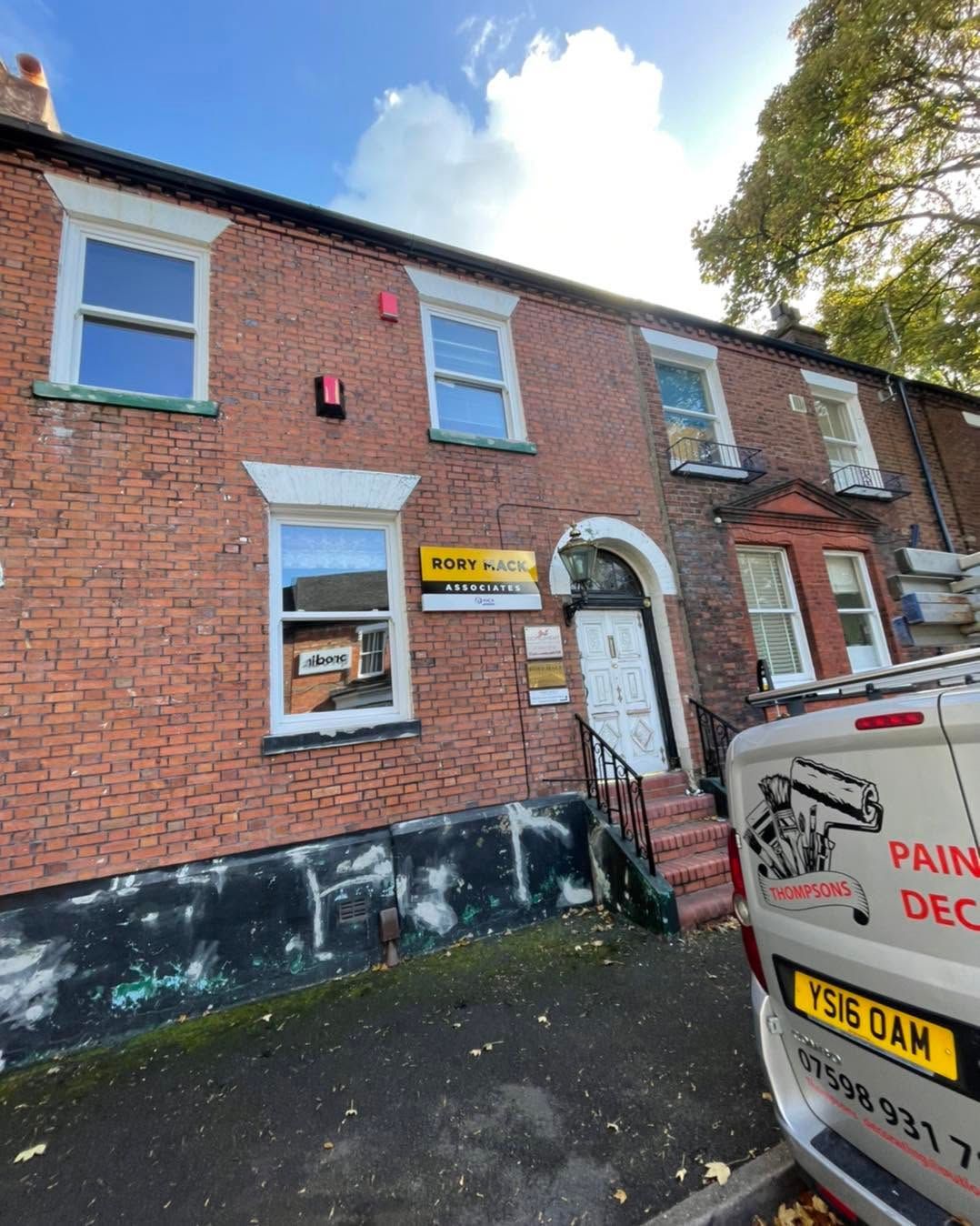
before
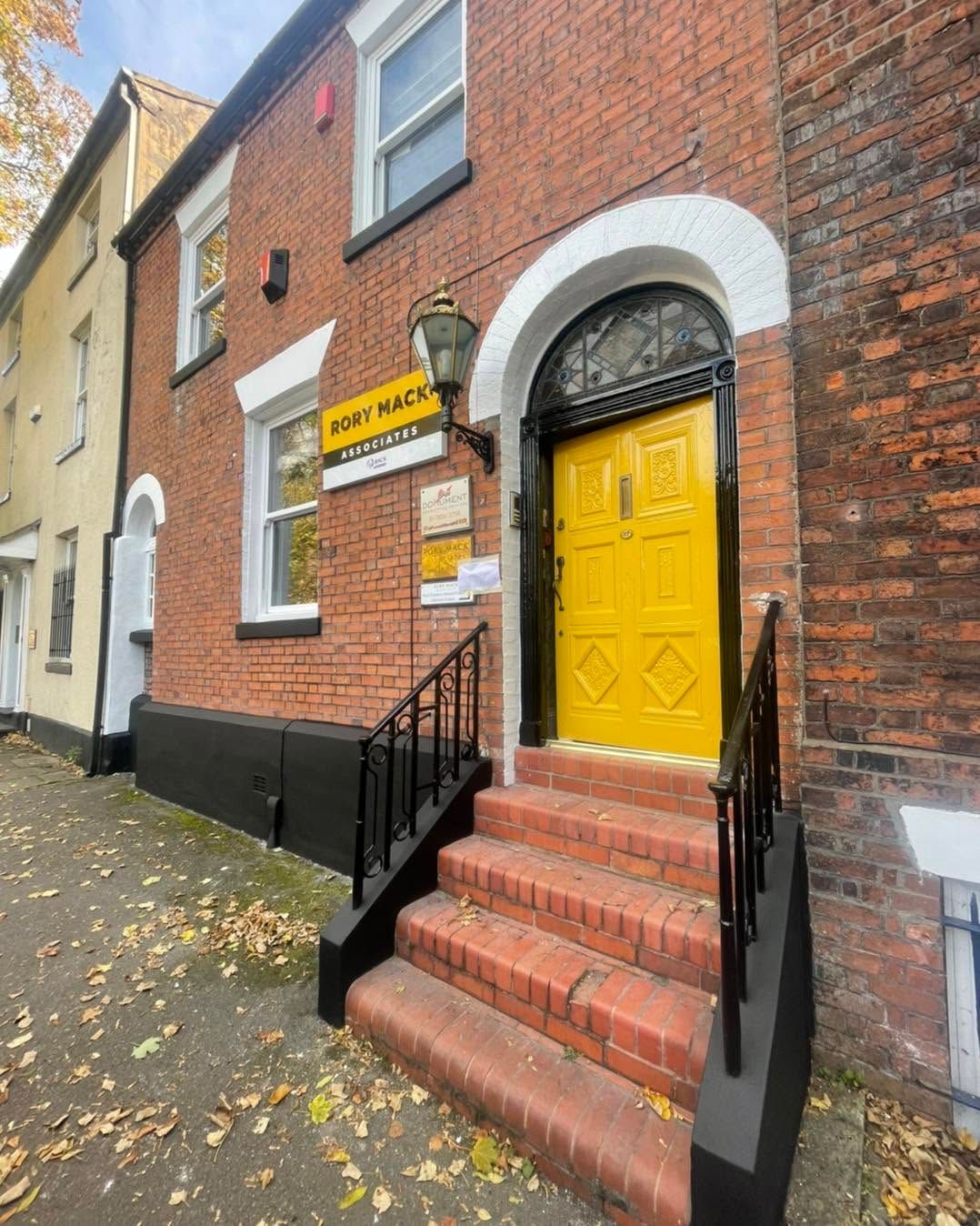
AFTER
Location

Newcastle-under-lyme


Property

Victorian terrace, now used as offices

Service

Front door restoration, with exterior painting of the entrance

Level of work

Full redecoration

Duration

1 week

Products

Johnstones

What did the customer need?

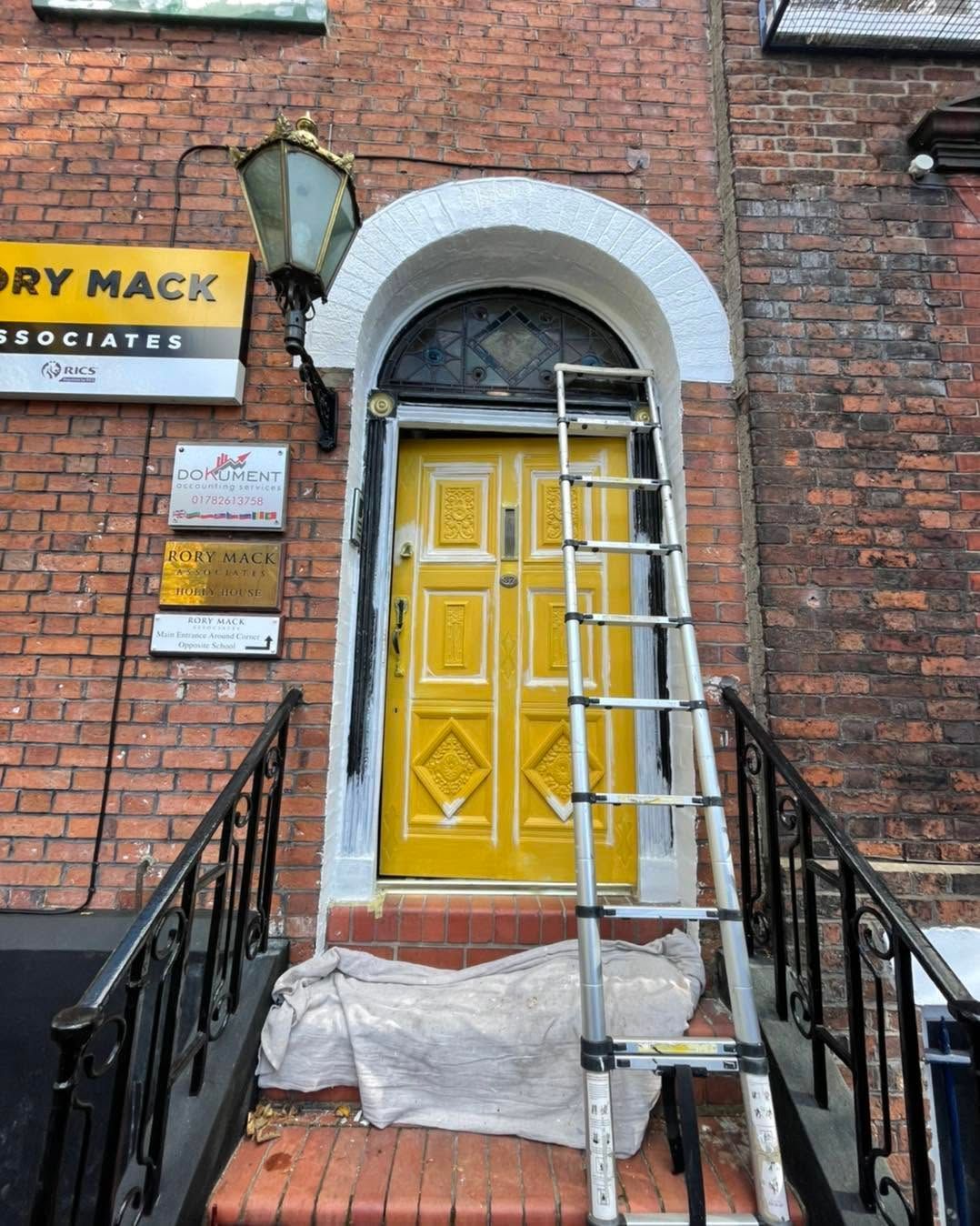
Rory Mack Associates needed the original front door at Holly House brought back to life. The building is a Victorian terrace used as offices, and the door is its best original feature. It has carved scrolls, rosettes and diamond panels, a stained glass fanlight above and black fluted pilasters on each side. The door had become tired and patchy, which didn't match the business inside. The client wanted to keep the original door rather than replace it. They also wanted the whole entrance to feel cared for, including the frame, railings and painted plinth along the front.

What condition was it in?

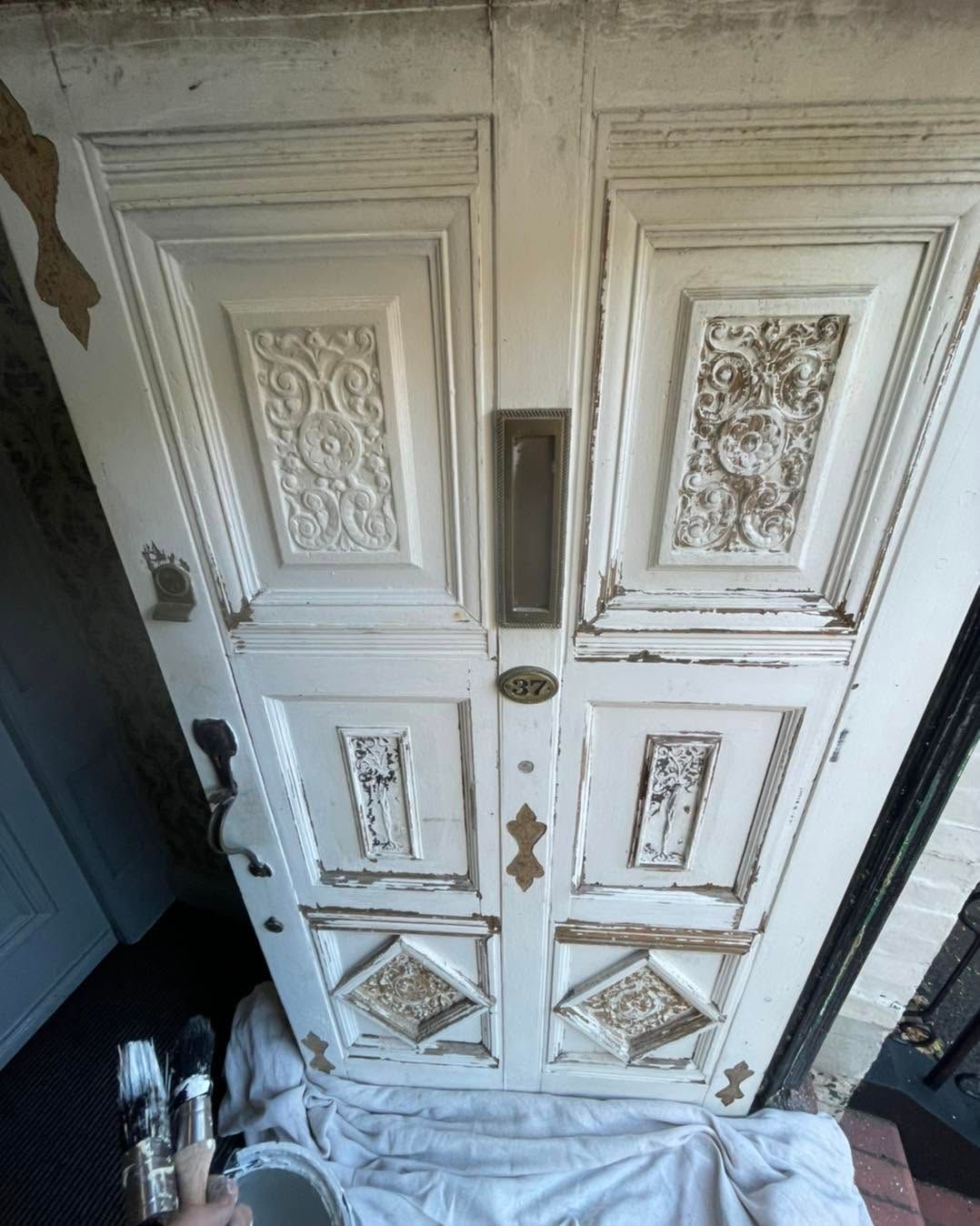
The door was solid, but decades of paint had built up and was peeling away from every carved detail. The layers had filled the carvings, so the fine lines of the scrolls and petals were blurred. Around the panel edges the paint had flaked off completely, leaving bare timber exposed to the weather. The black frame was chipped and worn. The plinth along the front was patchy, with pale filler marks showing through. The railings had lost their shine. None of it was beyond saving, but painting straight over the top would have buried the carvings even further.

What preparation was needed?

Preparation was the biggest part of this job, because the carved details had to be stripped by hand before any new paint could go on. This was a Full redecoration rather than a Refresh, because the old coatings had failed and needed to come off back to sound timber.

1

Laid dust sheets over the steps and protected the fanlight and brass fittings.

2

Scraped off all loose and flaking paint from the panels and mouldings.

3

Stripped the carved details by hand to open up each scroll, leaf and petal.

4

Sanded the flat panels and edges smooth.

5

Primed the bare timber on the door and frame.

6

Applied undercoat ready for the finishing coats.

Which paints and materials were used?

The door was finished in Johnstones, a gloss finish that stands up well to weather and daily use. Gloss is a good choice for a front door because it's hard-wearing, wipes clean and shows off carved detail well. Under it I used primer and undercoat, which gives the topcoat something sound to grip. The fluted pilasters and door head were painted in black gloss, keeping the original brass roundels. I used the same black on the railings. The plinth and step walls were painted in Johnstones paint, and the arch around the door was refreshed in Johnstones white.

What was the result?

The door now looks as it should, with every carving sharp and clear under a smooth gloss finish. You can see the full detail of the scrolls and diamond panels again, which had been lost for years. The yellow stands out against the black frame and white arch, so the entrance is easy to find from the street. The black railings and solid black plinth tidy up the whole frontage. The original brass letter plate, handle and number 37 are all still in place. Most importantly, the client kept their original Victorian door rather than replacing it.

Questions about this job

  • How long did the job take?

    The job took 1 week. Most of that time went on hand-stripping the carved panels, which can't be rushed. The painting itself was quicker once the door was properly prepared.

  • Is it worth restoring an old door instead of replacing it?

    Usually, yes, if the timber is sound. An original Victorian door has carving and character that a new door can't match, and restoring it often costs less than a good-quality replacement. I'll always check the timber first and tell you honestly if it's past saving.

  • Can you paint my front door to match my business colours?

    Yes. I can match a door to your branding, as long as the colour is available in a good exterior gloss. It's a simple way to make your entrance easy to spot and tie the building to your business.

More case studies

by Thompsons Painting & Decorating • 10 October 2026
The short answer
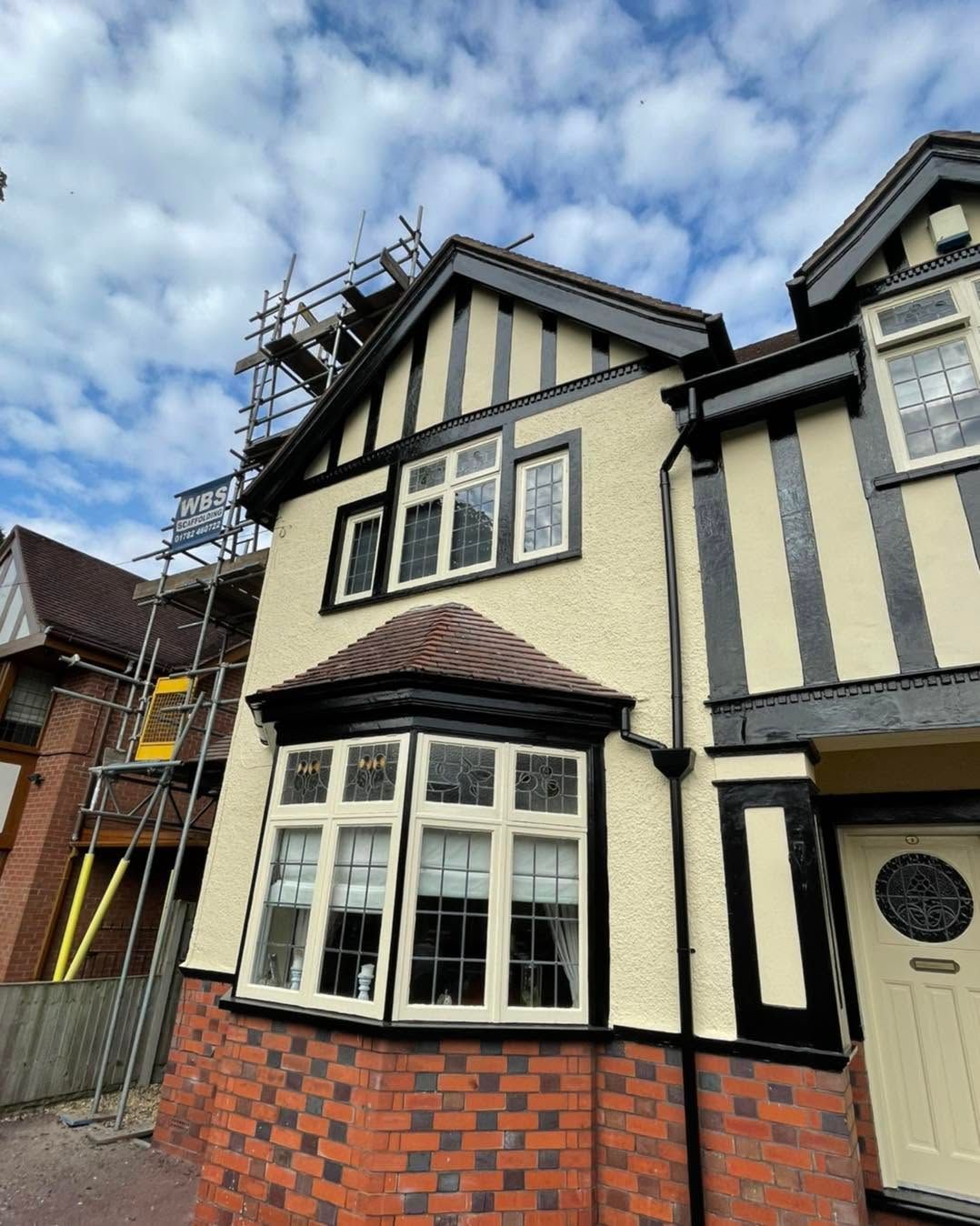
Tudor-style house with cream and black timbering, red brick base, and a bay window under a cloudy sky.
by Thompsons Painting & Decorating • 29 September 2026
See how I restored a 1930s mock Tudor home, from peeling black boards to a crisp black and cream finish. Before and after photos.
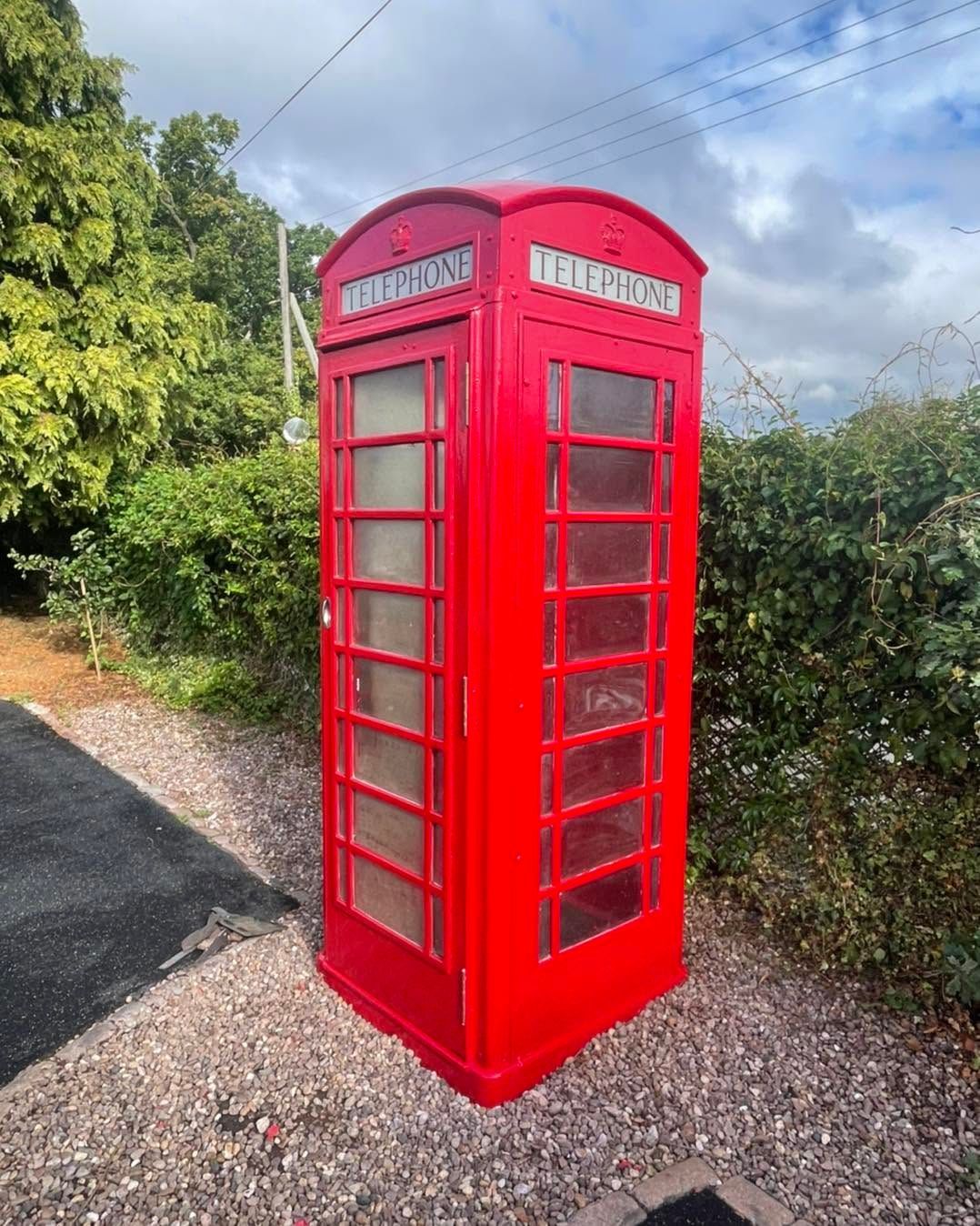
Bright red British-style telephone booth on gravel beside greenery under a cloudy sky
by Thompsons Painting & Decorating • 29 September 2026
See how I restored a 1930s K6 telephone box, sanded back, filled and glossed inside and out, with the frosting cleared from its panels.
Brick house wall with white-framed windows and ornate dark trim under the roofline
by Thompsons Painting & Decorating • 29 September 2026
How I repainted and resealed every timber window on a Victorian cottage, and why I recommended replacing the fascias.
Small room with yellow walls, geometric wallpaper, white door, radiator, and a table in the foreground.
by Thompsons Painting & Decorating • 29 September 2026
See how I stripped three layers of wallpaper and redecorated a period boardroom with Cole & Son paper and Little Greene paint.